Natural selection may not produce the best organisms
(Note that so far I've only read the "press-release" news item at this link so far, not the original paper yet.)
"While natural selection favors the most fit organisms around, evolutionary biologists have long wondered whether this leads to the best possible organisms in the long run.
A team of researchers at The University of Texas at Austin, led by Drs. Matthew Cowperthwaite and Lauren Ancel Meyers, has developed a new theory, which suggests that life may not always be optimal."
So... a sequence of local optimizations doesn't necessarily lead to a global optimum?
To anyone who's ever done any optimization, this is completely obvious (it happens all the time!). That's not to say that it's not useful to confirm a pretty well-known fact about optimization in this particular situation - but the way the story is worded, it kind of sounds like they expected different.
I guess this is another of those "try to make every bit of science news sound like a revolutionary breakthrough", as though just plain interesting science is somehow insufficient. If I can get time to read the paper, I will return and write some more.
Friday, July 18, 2008


Wednesday, July 16, 2008
Right to peaceful protest - upheld
A major part of the NSW government's special WYD laws that had many in the local blogging community up in arms has been overturned.
Two activists have taken the state government to the Federal court over the recently passed World Youth Day laws. Their argument that the laws were unconstiutional because they made peaceful protest illegal was upheld, in part because the definition of "annoy" was potentially too broad.
(Their other claim - that banning the unauthorised sale of items such as stickers, badges and T-shirts, was unconstitutional - was not upheld.)
Two activists have taken the state government to the Federal court over the recently passed World Youth Day laws. Their argument that the laws were unconstiutional because they made peaceful protest illegal was upheld, in part because the definition of "annoy" was potentially too broad.
(Their other claim - that banning the unauthorised sale of items such as stickers, badges and T-shirts, was unconstitutional - was not upheld.)
Sunday, July 13, 2008
The cracker controversy
Over at Intrinsically Knotted, musesusan has a discussion of the blow up over PZ's response (et seq.) to the cracker thing that I broadly agree with.
(Er, I mean that I agree with musesusan. That sentence needs emergency surgery, stat!)
We don't have a right to avoid offense - it's under our own control.
I wouldn't choose to do what PZ did, but the reaction he's getting is nuts.
Either the cracker really is the body of christ or it isn't.
- If it isn't, they're threatening death over a cracker, irrespective of what it symbolizes, and feeling offended over rude treatment of a symbol is one thing, but the pitchforks and torches seem to be making PZ's point for him.
- If it is, most of the complaints seem to be about entirely the wrong thing. We have literal flesh of Jesus, which is consumed by the ton (a billion Catholics times a few grams actually makes many thousands of tons of Jesus flesh every week). Over a year, it's millions of tons of Jesus flesh per year. And a few grams of that might be treated in a disrespectful way by a single nonbeliever. Who is actually harmed by that? Jesus then has a stake in it, but is the flesh consumed by others ruined? If Jesus is real, is the Son of God and is actually recreated in the flesh by the ton every hour, do believers actually have a basis for claiming there's some harm being done? Jesus may have a right to object, in which case he's free to say to PZ "Cut it out, doofus". But apart from a gut response to PZ's gaucheness, what is the deal here?
It seems to me that the responses are much more consistent with the first situation than the second - many of the responses indicate that the problem is people fear that PZ may be right. If the cracker really is the flesh of Jesus, where's the need for death threats? No, the severe over-reaction comes because maybe it isn't. That's where that savage fury comes from - because if PZ successfully treats a cracker disrespectfully, and Jesus doesn't come down and ask him to quit it, maybe it is just a cracker. That's what makes it so scary.
(I wrote a related essay on religious over-reaction in Fear the Truth.)
(Er, I mean that I agree with musesusan. That sentence needs emergency surgery, stat!)
We don't have a right to avoid offense - it's under our own control.
I wouldn't choose to do what PZ did, but the reaction he's getting is nuts.
Either the cracker really is the body of christ or it isn't.
- If it isn't, they're threatening death over a cracker, irrespective of what it symbolizes, and feeling offended over rude treatment of a symbol is one thing, but the pitchforks and torches seem to be making PZ's point for him.
- If it is, most of the complaints seem to be about entirely the wrong thing. We have literal flesh of Jesus, which is consumed by the ton (a billion Catholics times a few grams actually makes many thousands of tons of Jesus flesh every week). Over a year, it's millions of tons of Jesus flesh per year. And a few grams of that might be treated in a disrespectful way by a single nonbeliever. Who is actually harmed by that? Jesus then has a stake in it, but is the flesh consumed by others ruined? If Jesus is real, is the Son of God and is actually recreated in the flesh by the ton every hour, do believers actually have a basis for claiming there's some harm being done? Jesus may have a right to object, in which case he's free to say to PZ "Cut it out, doofus". But apart from a gut response to PZ's gaucheness, what is the deal here?
It seems to me that the responses are much more consistent with the first situation than the second - many of the responses indicate that the problem is people fear that PZ may be right. If the cracker really is the flesh of Jesus, where's the need for death threats? No, the severe over-reaction comes because maybe it isn't. That's where that savage fury comes from - because if PZ successfully treats a cracker disrespectfully, and Jesus doesn't come down and ask him to quit it, maybe it is just a cracker. That's what makes it so scary.
(I wrote a related essay on religious over-reaction in Fear the Truth.)
Wednesday, July 9, 2008
The Riemann hypothesis - why does it matter?
Mathematicians regard the Riemann hypothesis as very important, not least because a fair number of important theorems have been shown, given the assumption that the Riemann hypothesis is correct, so as soon as it's shown to be true, a whole pile of other interesting stuff is also true. Its impact is both practical and theoretical.
But when I was talking to William earlier today, he summed it up well:
"If it isn't true, math is a lot weirder than we think it is."
[Oh, and in case you are wondering what the situation with Li's proof is - while I was away on vacation for a few days, the paper was withdrawn. It appears Li could not rescue the proof. ]
But when I was talking to William earlier today, he summed it up well:
"If it isn't true, math is a lot weirder than we think it is."
[Oh, and in case you are wondering what the situation with Li's proof is - while I was away on vacation for a few days, the paper was withdrawn. It appears Li could not rescue the proof. ]
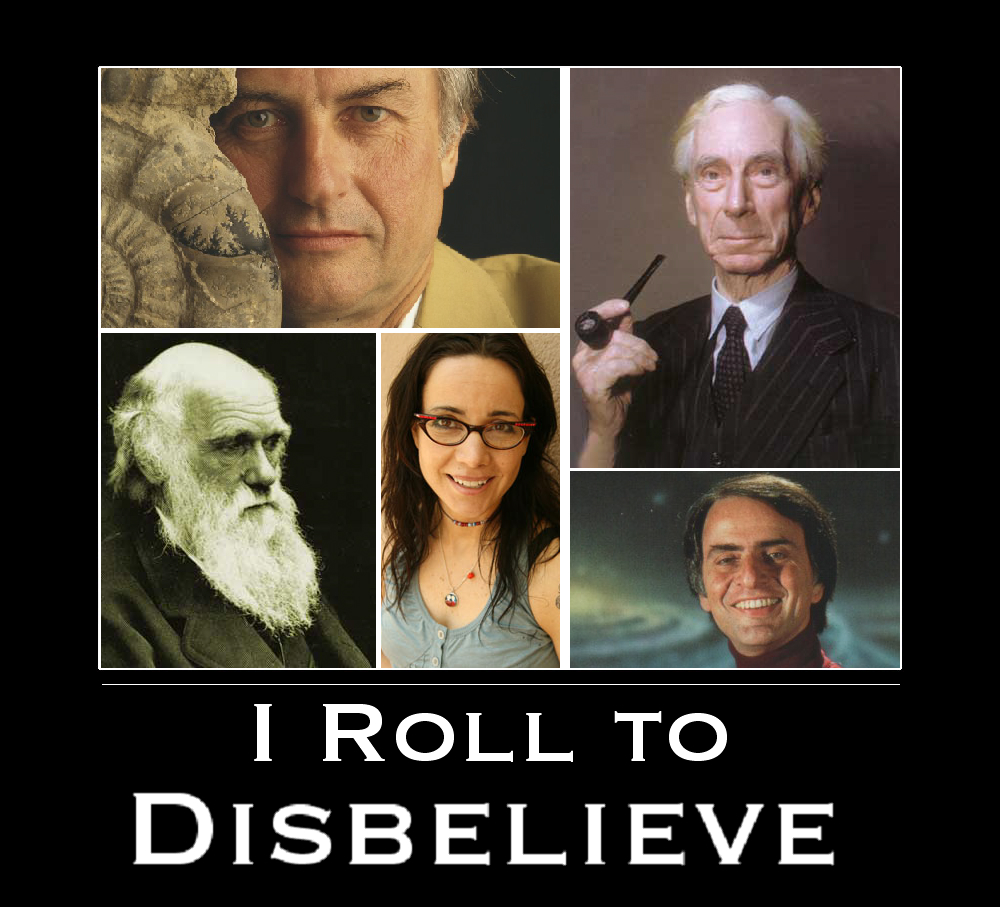
Motivational poster
My 'net friend William has made a motivational poster.

(Click image
for larger
original)
Can you name them all?
(Click image
for larger
original)
Can you name them all?
Sunday, July 6, 2008
"Quantum computers will be better than..."
ordinary computers programmed by publicists or reporters.
The story I linked to yesterday on a quantum computing development says this:
That's just stupid. The phonebook is in order for a start. So at worst, you'd use a binary search (but there are better things to do than that). That's already "exponentially better" (using their own words).
The story I linked to yesterday on a quantum computing development says this:
If a traditional computer were given the task of looking up a person's phone number in a telephone book, it would look at each name in order until it found the right number.
That's just stupid. The phonebook is in order for a start. So at worst, you'd use a binary search (but there are better things to do than that). That's already "exponentially better" (using their own words).
Saturday, July 5, 2008
Science and other news
From the last week or so:
Possible evidence of life from 4.25bya trapped in zircon crystals from Western Australia
Not just oil: Gallium, iridium, indium, hafnium to run out within a decade
Genetic component to political participation
Viagra-like effect from watermelon
Half of gun deaths are suicides, and suicides are much more likely to occur when a gun is present than not.
Another interesting development along the way to quantum computers.
Three items relating to benefits of drinking coffee:
Caffeine after exercise helps muscles refuel
...helps prevent MS
...and lowers risk of liver cancer
Possible evidence of life from 4.25bya trapped in zircon crystals from Western Australia
Not just oil: Gallium, iridium, indium, hafnium to run out within a decade
Genetic component to political participation
Viagra-like effect from watermelon
Half of gun deaths are suicides, and suicides are much more likely to occur when a gun is present than not.
Another interesting development along the way to quantum computers.
Three items relating to benefits of drinking coffee:
Caffeine after exercise helps muscles refuel
...helps prevent MS
...and lowers risk of liver cancer
Some pointers for new vistors
I'm getting some hits from people looking for my Faith-based mathematics cartoon and some of my other posts. Cartoon/comic posts are here. Mathematics-related posts are here (also probability, statistics).
A post on believing what you feel in your heart is here.
Other tags are over on the right. I wish I knew how to only display tags that occurred more than twice.
A post on believing what you feel in your heart is here.
Other tags are over on the right. I wish I knew how to only display tags that occurred more than twice.
Friday, July 4, 2008
Manufacturing dissent
Another WYD post.
I agree strongly with Ninglun's point - by so casually tossing aside our freedom to make simple protests, the NSW government has created a much bigger desire to protest.
As it was, there would have been some minor level of at worst moderately disruptive protest (for which there are already sufficient laws for police and officials to rely on), but most people that are irritated by the inconvenience, the gifting of large amounts of supposedly secular government money to support a religious event, the ridiculous attention given to that ludicrous entity the Catholic Church and the equally ludicrous Pope Dorothy* would not have been annoyed enough to even think about actually getting out and protesting.
Now a lot of people are damn annoyed. Result: protests.
Either the government is stupid, or it's a deliberate Bushification tactic. Either way, this is one unhappy puppy.
*(think about it - ruby slippers, visiting the land of Oz - what else am I going to call him? Expect Pope Dorothy in Oz comics if I can get time to do some.)
I agree strongly with Ninglun's point - by so casually tossing aside our freedom to make simple protests, the NSW government has created a much bigger desire to protest.
As it was, there would have been some minor level of at worst moderately disruptive protest (for which there are already sufficient laws for police and officials to rely on), but most people that are irritated by the inconvenience, the gifting of large amounts of supposedly secular government money to support a religious event, the ridiculous attention given to that ludicrous entity the Catholic Church and the equally ludicrous Pope Dorothy* would not have been annoyed enough to even think about actually getting out and protesting.
Now a lot of people are damn annoyed. Result: protests.
Either the government is stupid, or it's a deliberate Bushification tactic. Either way, this is one unhappy puppy.
*(think about it - ruby slippers, visiting the land of Oz - what else am I going to call him? Expect Pope Dorothy in Oz comics if I can get time to do some.)
Don S Davis dead
Don S Davis, 1942-2008
About which I am sad for entirely selfish reasons.
Also, I have had a post in progress about Stargate SG-1 (and religion) since forever. More than six months, anyway. I might bump it up the priority list. But since I am about to go away for a few days, it's unlikely to be topical when I finish.
About which I am sad for entirely selfish reasons.
Also, I have had a post in progress about Stargate SG-1 (and religion) since forever. More than six months, anyway. I might bump it up the priority list. But since I am about to go away for a few days, it's unlikely to be topical when I finish.
Riemann not proved. Not yet, anyway.
Well, I was right, there are holes (no prizes for making an obvious guess).
Isabel reports on it; I can't do better than direct you to her links, where Terry Tao and Alain Connes discuss problems.
Tao said: "It unfortunately seems that the decomposition claimed in equation (6.9) on page 20 of that paper is, in fact, impossible; it would endow the function h (which is holding the arithmetical information about the primes) with an extremely strong dilation symmetry which it does not actually obey. It seems that the author was relying on this symmetry to make the adelic Fourier transform far more powerful than it really ought to be for this problem."
Connes said: "I dont like to be too negative in my comments. Li's paper is an attempt to prove a variant of the global trace formula of my paper in Selecta. The "proof" is that of Theorem 7.3 page 29 in Li's paper, but I stopped reading it when I saw that he is extending the test function h from ideles to adeles by 0 outside ideles and then using Fourier transform (see page 31). This cannot work and ideles form a set of measure 0 inside adeles (unlike what happens when one only deals with finitely many places)."
Isabel reports on it; I can't do better than direct you to her links, where Terry Tao and Alain Connes discuss problems.
Tao said: "It unfortunately seems that the decomposition claimed in equation (6.9) on page 20 of that paper is, in fact, impossible; it would endow the function h (which is holding the arithmetical information about the primes) with an extremely strong dilation symmetry which it does not actually obey. It seems that the author was relying on this symmetry to make the adelic Fourier transform far more powerful than it really ought to be for this problem."
Connes said: "I dont like to be too negative in my comments. Li's paper is an attempt to prove a variant of the global trace formula of my paper in Selecta. The "proof" is that of Theorem 7.3 page 29 in Li's paper, but I stopped reading it when I saw that he is extending the test function h from ideles to adeles by 0 outside ideles and then using Fourier transform (see page 31). This cannot work and ideles form a set of measure 0 inside adeles (unlike what happens when one only deals with finitely many places)."
Thursday, July 3, 2008
Riemann proved??
A Proof of the Riemann Hypothesis by Xian-Jin Li. (link now fixed)
This is no crackpot. He's a mathematician who has his PhD in the right area.
I am not qualified (in the sense that I havenolittle* familiarity with this area of mathematics) to judge, but the mathematical world will be all over this one. [* Edit: well, actually, having read through it, it doesn't look to be as tough a paper as I first thought. I can understand some of it. I expect this claimed result will be either confirmed or disconfirmed in short order. If it's right, I suspect that it can be made even simpler (and if its wrong, it can be made as simple as you like!)]
My guess as an outsider... it will probably turn out to have a few holes in it. But if he's claiming it, he's probably really got something; if it's not there yet, it will probably turn out to be an important step, and if the holes are small, they'll be plugged soon enough. The fact that its a short paper increases the chance that Li hasn't missed something.
h/t Isabel Lugo
This is no crackpot. He's a mathematician who has his PhD in the right area.
I am not qualified (in the sense that I have
My guess as an outsider... it will probably turn out to have a few holes in it. But if he's claiming it, he's probably really got something; if it's not there yet, it will probably turn out to be an important step, and if the holes are small, they'll be plugged soon enough. The fact that its a short paper increases the chance that Li hasn't missed something.
h/t Isabel Lugo
Wednesday, July 2, 2008
Hundredth post
100 is a bit of a milestone, so I figured I'd mark it.
I'm reasonably happy how this blog has come along, and I'm glad some people are reading it.
A few months ago I started using sitemeter to track my visits. The first weekly report I got had my average visit length at two seconds. Most people who made it to my site were finding me through google searches, not finding what they were expecting, and hotfooting it back to safer pages.
Nowadays, the average visit length is about two minutes - long enough to read a short post or two. The average page views is 1.6 - so a lot of people are sticking around to look at more of my site.
I'm getting hits from all over - a post I made on percentages has proved to be incredibly popular, giving me sustained traffic for a month. Some of my comics got linked to from several places. Some posts in carnivals have netted me some good hits, and in particular when PZ mentions the Carnival of the Elitist Bastards, there's always a nice bump. Comments in other blogs often grab a few visits.
Since I started with sitemeter (the earliest date I can tell for sure), I've been better than doubling visits and page views every month... except last month, when my hits nearly quadrupled over the month before. In July I don't think I'll beat last month (I'll have even less time to post), but it looks like there might be a good chance of keeping up close to the hit rate on the days I can post.
A warning: I have been sick this week, which has cut down on the posting, and next week I will be away several days (and so not posting at all). So posts will be shorter, and less frequent over the next week or so. If you don't see posts, I haven't died or anything.
I'm reasonably happy how this blog has come along, and I'm glad some people are reading it.
A few months ago I started using sitemeter to track my visits. The first weekly report I got had my average visit length at two seconds. Most people who made it to my site were finding me through google searches, not finding what they were expecting, and hotfooting it back to safer pages.
Nowadays, the average visit length is about two minutes - long enough to read a short post or two. The average page views is 1.6 - so a lot of people are sticking around to look at more of my site.
I'm getting hits from all over - a post I made on percentages has proved to be incredibly popular, giving me sustained traffic for a month. Some of my comics got linked to from several places. Some posts in carnivals have netted me some good hits, and in particular when PZ mentions the Carnival of the Elitist Bastards, there's always a nice bump. Comments in other blogs often grab a few visits.
Since I started with sitemeter (the earliest date I can tell for sure), I've been better than doubling visits and page views every month... except last month, when my hits nearly quadrupled over the month before. In July I don't think I'll beat last month (I'll have even less time to post), but it looks like there might be a good chance of keeping up close to the hit rate on the days I can post.
A warning: I have been sick this week, which has cut down on the posting, and next week I will be away several days (and so not posting at all). So posts will be shorter, and less frequent over the next week or so. If you don't see posts, I haven't died or anything.
Nobility must be earned
A random post.
Annoyance #99:
My state government has a "don't offend the Catholics" law in place. I have to fork over *lots* of my hard earned cash (via the government) to support the stupidly-named World Youth Day (a lovely little convention where altar boys from all over the world can compare their sodomization stories), and I can't even wear a FUCK THE POPE T-shirt?
Well, fuck the pope and this government.
Next election, if I have to vote for those fetid arsewipe Libs in order to get rid of this lot, I will; of course, I'd vote against them next time around - maybe giving the current mob a few years in opposition will do some good. This mob has been in too long, and the Liberals don't stink quite so much just now. It would make me puke just to vote for them, but if I'm going to puke either way, it might as well be in the service of getting some new blood into the government.
Who knows, maybe the Libascists can get the trains running on time.
[Aside added in later edit]: More on WYD over at The Thinkers Podium.
Maybe I need a T-shirt like this.
Something like this - the second part shows what it would look like if I put a bit of tape over the middle, rather than folding it. It's a bit subtler, I think:

Now, to be really subtle, just have the first line and cover the bottom half. If they read something into that, well, that's their own evil mind, innit?
More T-shirts at Five Public Opinions
[end of edit]
On an almost completely unrelated matter, PZed said:
I'd like to put that on a t-shirt. Except the pope would be offended and I'll be out $5500 and get strip-searched.
Annoyance #99:
My state government has a "don't offend the Catholics" law in place. I have to fork over *lots* of my hard earned cash (via the government) to support the stupidly-named World Youth Day (a lovely little convention where altar boys from all over the world can compare their sodomization stories), and I can't even wear a FUCK THE POPE T-shirt?
Well, fuck the pope and this government.
Next election, if I have to vote for those fetid arsewipe Libs in order to get rid of this lot, I will; of course, I'd vote against them next time around - maybe giving the current mob a few years in opposition will do some good. This mob has been in too long, and the Liberals don't stink quite so much just now. It would make me puke just to vote for them, but if I'm going to puke either way, it might as well be in the service of getting some new blood into the government.
Who knows, maybe the Libascists can get the trains running on time.
[Aside added in later edit]: More on WYD over at The Thinkers Podium.
Maybe I need a T-shirt like this.
Something like this - the second part shows what it would look like if I put a bit of tape over the middle, rather than folding it. It's a bit subtler, I think:

Now, to be really subtle, just have the first line and cover the bottom half. If they read something into that, well, that's their own evil mind, innit?
More T-shirts at Five Public Opinions
[end of edit]
On an almost completely unrelated matter, PZed said:
We are not princes of the earth, we are the descendants of worms, and any nobility must be earned.
I'd like to put that on a t-shirt. Except the pope would be offended and I'll be out $5500 and get strip-searched.
Monday, June 30, 2008
The Image Fulgurator
Many of you will have probably seen this (e.g. on Wired), but just in case you haven't, Rod at Reasonable Deviations has a discussion of Julius von Bismarck's device, which looks a bit like a camera with a speedgun mounted in the back of it. Camera flashes when other people take pictures set off its own flash unit, which fires through the image on film in the camera, projecting it onto whatever the camera is focused on... like a kind of instantaneous graffiti - it's too brief to be seen by eye, but it shows up in the shot.
I'm not sure what to think of it (aside from, "Damn, that's clever"), but I can see the potential for a lot of shenannigans of various kinds.
I'm not sure what to think of it (aside from, "Damn, that's clever"), but I can see the potential for a lot of shenannigans of various kinds.
Examples of the genre
In my previous post I said:
That last site approaches farce, and it's trying to teach statistics!. This is often what happens when people whose own area is not statistics get put in charge of teaching it. (For some reason mathematicians are among the worst offenders.)
There were more examples. The above ones are pretty standard.
Unfortunately, based only on the information that the third central moment was zero, many people would in fact describe it as symmetric.I've seen many examples over the years, so I figured it shouldn't be hard to find one or two. A quick google search reveals some examples:
- This page on using a TI83 calculator has:
- "Skewness measures the departure from symmetry" (it defines skewness as the third moment measure I mentioned, so it is saying that 0 third moment implies symmetry)
- it goes on to suggest a test statistic for symmetry based on this, and concludes that discussion with "If that fraction is between −2 and 2, you can’t say whether the population is symmetric (skewness = 0) or skewed."
- This paper on brain evolution has:
- "SK, subclade skewness (- negative skew; 0, symmetric distribution; + positive skew)"
- "the system is probably passive if average subclade skew is neutral (symmetric distribution) or negative"
- This set of notes for a university* subject called "Introduction to Statistics" has the following complete howlers:
- "If the skewness is approximately zero, the histogram (distribution) for the data is symmetric and usually normal"
- "'varB' has a skewness close to zero so that its distribution should be normal and mean and median should be similar."
That last site approaches farce, and it's trying to teach statistics!. This is often what happens when people whose own area is not statistics get put in charge of teaching it. (For some reason mathematicians are among the worst offenders.)
There were more examples. The above ones are pretty standard.
Sunday, June 29, 2008
Not fooling ourselves (I) - the unmeasuring of asymmetry
In order to impose some kind of structure on our understanding of complex phenomena, we tend to use simple terms to describe what may be surprisingly nonsimple.
In order to make progress, we often attempt to quantify those descriptives. This is not just useful, it's often unavoidable, but the act carries with it a special danger, because we then (almost universally) invest the nonunique quantification of the concept with a "reality" that it doesn't merit - and that can lead to nonsense.
[It may be this is another version of the common phenomenon of believing mathematical models when at the beginning we knew them to be at best a rough approximation. Models tend to take on a life of their own, and their conclusions are often treated with a respect we did not accord the original model when it was first tentatively adopted. We need to step back and remember the model was never exactly the thing it was used to describe.]
I think this may be the flip side of what Blake Stacey was talking about when he was discussing the confusions that come in when an inherently mathematical concept is translated into a nonmathematical description.
Let me take a concrete example with which I am familiar. It relates to descriptions of probability distributions.
We begin with something that is inherently mathematical - symmetry. Symmetry is an extraordinarily useful, almost universal concept in mathematics. For what I'll be talking about you can just use the more common senses of reflection symmetry and rotational symmetry.
In the case of symmetry of distributions, there are several ways to define it (if you have a continuous or a discrete random variable, you can define it in the usual "mirror symmetry" sense), but the more general definition would have something like "m is the centre of symmetry if Prob(X≤ m-a) = Prob(X≥ m+a) for all a" (which effectively corresponds to rotational symmetry of the distribution function about the points (m, 1/2), if you tidy up details the right way).
Anyway, "symmetry" is both easily understood and fairly easy to pin down. Of course, almost all distributions are not symmetric (but symmetry arises in a natural way in particular circumstances, so it's far from a useless concept).
Aside from "unimodal" (one "hump"), or the overused and badly abused "bell-shaped", one of the most common descriptions of a distributional shape that is applied would probably be "skewed". An elementary book might have a diagram like the top one below (see for example, the diagram at Wikipedia's entry on skewness). The corresponding distribution function is underneath.

Diagram of a right (positive) skewed density and distribution function.
If you flipped the above density left-to-right (or rotated the distribution about the median), it would have left (negative) skewness.
Notice that "right skewed" means the long tail is to the right (this is often the opposite of a beginner's intuition about what the term should mean).
The problem comes when this seemingly clear but actually vague notion is quantified. There are numerous quantities that have been called "skewness". By far the most popular is the standardized third moment (or, equivalently, the standardized third cumulant) - so much so that it is frequently called "the" skewness. Equivalent sample statistics are used for samples.
Now for a distribution like the one above, this quantity is positive (when it exists). If you flip that density shape left to right, the skewness measure is negative. Importantly, when the density is symmetric and the first three moments exist, the skewness is 0. So far so good - left and right skewness and symmetry in pictures generally correspond to negative, positive and zero quantities on the measurement.
However, the problem comes when interpreting a standardized third moment back in terms of the density.
A positive number will lead people to call the distribution "right skew" without looking at it. A number near zero will cause people to call the distribution "symmetric". In the first case, the distribution will be asymmetric but it may not appear to be skewed with a tail to the right. And the value can be exactly zero without the distribution being symmetric. While symmetry implies zero third moment (if it exists), the implication does not go back the other way.
Consider a fair six-sided die with the following labels on its faces: 0, 0, 5, 5, 5, 9. The distribution of outcomes is not symmetric, yet its "skewness" measure is zero. Unfortunately, based only on the information that the third central moment was zero, many people would in fact describe it as symmetric.[Added later: here's one that most people would say on inspection was "right skew" - an ordinary die labelled 0, 0, 5, 5, 7, 10. But the third central moment is zero.]
Other examples, both continuous and discrete, abound. Continuous asymmetric distributions exist for which all odd central moments are zero.
Other measures of skewness (and there have been many) also have their problems, though some are very useful.
The sort of problem described here is essentially unavoidable - there are so many ways a distribution may be asymmetric that a single measure of asymmetry cannot possibly suffice, except perhaps within the framework of a particular family of distributions.
This cautionary tale is not an argument against using measures like the third central moment to attempt to capture something of deviations from symmetry - it's an argument against investing them with more than the limited meaning than they posses.
In order to make progress, we often attempt to quantify those descriptives. This is not just useful, it's often unavoidable, but the act carries with it a special danger, because we then (almost universally) invest the nonunique quantification of the concept with a "reality" that it doesn't merit - and that can lead to nonsense.
[It may be this is another version of the common phenomenon of believing mathematical models when at the beginning we knew them to be at best a rough approximation. Models tend to take on a life of their own, and their conclusions are often treated with a respect we did not accord the original model when it was first tentatively adopted. We need to step back and remember the model was never exactly the thing it was used to describe.]
I think this may be the flip side of what Blake Stacey was talking about when he was discussing the confusions that come in when an inherently mathematical concept is translated into a nonmathematical description.
Let me take a concrete example with which I am familiar. It relates to descriptions of probability distributions.
We begin with something that is inherently mathematical - symmetry. Symmetry is an extraordinarily useful, almost universal concept in mathematics. For what I'll be talking about you can just use the more common senses of reflection symmetry and rotational symmetry.
In the case of symmetry of distributions, there are several ways to define it (if you have a continuous or a discrete random variable, you can define it in the usual "mirror symmetry" sense), but the more general definition would have something like "m is the centre of symmetry if Prob(X≤ m-a) = Prob(X≥ m+a) for all a" (which effectively corresponds to rotational symmetry of the distribution function about the points (m, 1/2), if you tidy up details the right way).
Anyway, "symmetry" is both easily understood and fairly easy to pin down. Of course, almost all distributions are not symmetric (but symmetry arises in a natural way in particular circumstances, so it's far from a useless concept).
Aside from "unimodal" (one "hump"), or the overused and badly abused "bell-shaped", one of the most common descriptions of a distributional shape that is applied would probably be "skewed". An elementary book might have a diagram like the top one below (see for example, the diagram at Wikipedia's entry on skewness). The corresponding distribution function is underneath.

If you flipped the above density left-to-right (or rotated the distribution about the median), it would have left (negative) skewness.
Notice that "right skewed" means the long tail is to the right (this is often the opposite of a beginner's intuition about what the term should mean).
The problem comes when this seemingly clear but actually vague notion is quantified. There are numerous quantities that have been called "skewness". By far the most popular is the standardized third moment (or, equivalently, the standardized third cumulant) - so much so that it is frequently called "the" skewness. Equivalent sample statistics are used for samples.
Now for a distribution like the one above, this quantity is positive (when it exists). If you flip that density shape left to right, the skewness measure is negative. Importantly, when the density is symmetric and the first three moments exist, the skewness is 0. So far so good - left and right skewness and symmetry in pictures generally correspond to negative, positive and zero quantities on the measurement.
However, the problem comes when interpreting a standardized third moment back in terms of the density.
A positive number will lead people to call the distribution "right skew" without looking at it. A number near zero will cause people to call the distribution "symmetric". In the first case, the distribution will be asymmetric but it may not appear to be skewed with a tail to the right. And the value can be exactly zero without the distribution being symmetric. While symmetry implies zero third moment (if it exists), the implication does not go back the other way.
Consider a fair six-sided die with the following labels on its faces: 0, 0, 5, 5, 5, 9. The distribution of outcomes is not symmetric, yet its "skewness" measure is zero. Unfortunately, based only on the information that the third central moment was zero, many people would in fact describe it as symmetric.[Added later: here's one that most people would say on inspection was "right skew" - an ordinary die labelled 0, 0, 5, 5, 7, 10. But the third central moment is zero.]
Other examples, both continuous and discrete, abound. Continuous asymmetric distributions exist for which all odd central moments are zero.
Other measures of skewness (and there have been many) also have their problems, though some are very useful.
The sort of problem described here is essentially unavoidable - there are so many ways a distribution may be asymmetric that a single measure of asymmetry cannot possibly suffice, except perhaps within the framework of a particular family of distributions.
This cautionary tale is not an argument against using measures like the third central moment to attempt to capture something of deviations from symmetry - it's an argument against investing them with more than the limited meaning than they posses.
Friday, June 27, 2008
Tyson
Saw Neil deGrasse Tyson on Colbert last night.
He was very quick with his response to Colbert's bit about "Goddiddit" ("You can say that, but then you can't find out anything," if memory is working okay).
Then again, I guess he's been on enough to know it was coming.
Is the man hot, or is it just me?
(Link now goes to correct segment, not just the right show, so you don't have to find it in the list.)
He was very quick with his response to Colbert's bit about "Goddiddit" ("You can say that, but then you can't find out anything," if memory is working okay).
Then again, I guess he's been on enough to know it was coming.
Is the man hot, or is it just me?
(Link now goes to correct segment, not just the right show, so you don't have to find it in the list.)
Tuesday, June 24, 2008

Am I A Positive Atheist?
I wrote a longer version of this post, but it has been eaten by a grue. This one is different.
I was about to start writing the first version of this when I noticed that Dana asks "What kind of atheist are you?". An interesting coincidence, because in some way this post is related.
I must admit a certain amount of confusion with the term "positive atheism". I don't see atheism as inherently positive or negative. (I see the step of throwing off irrational faith in favour of reality as a positive one, but that's a benefit of becoming an atheist, not of being one in the sense that it's not an active process.)
Being an atheist, living as an atheist, is neither positive nor negative. You can live a positive life, or a negative one, or anything in between, and be an atheist. Atheism is orthogonal to positivity.
This might seem incongruous, given I just had a post in the 21st Humanist Symposium. Humanism is the sort of philosphy people tend to associate with "positive atheism" and the Humanist Symposium's brief is definitely about living positively, but humanism and atheism are quite different - many atheists are humanists, and many others are not. Many humanists are also not atheists. But, nevertheless, many atheists are attracted to humanism. I agree with many of its tenets, but I don't see humanism as connected to atheism, so to me it's not really "positive atheism", it's just humanism, and neither is necessary to the other. Similarly, my post was about using probability to figure out that some apparently worrisome things may be nothing to worry about, and that an understanding of probability could help lift burdens of worry from our lives. But again, it's not atheism that's doing that. Atheism's job came earlier, in removing the attempt to explain such events as the acts of an incomrehensible and all-powerful god (the positive step of becoming an atheist). With that non-answer out of the way, there is room for the rational explanations of probability to make their positive contribution. So it is with humanism and other positive worldviews that many atheists have.
I'm generally a very positive and content person. I happen to be positive, and I happen to be an atheist.
But the phrase "positive atheism" (and for that matter, all the negative epithets theists throw at atheism) just doesn't have any more resonance for me than "yellow music" does.
I was about to start writing the first version of this when I noticed that Dana asks "What kind of atheist are you?". An interesting coincidence, because in some way this post is related.
I must admit a certain amount of confusion with the term "positive atheism". I don't see atheism as inherently positive or negative. (I see the step of throwing off irrational faith in favour of reality as a positive one, but that's a benefit of becoming an atheist, not of being one in the sense that it's not an active process.)
Being an atheist, living as an atheist, is neither positive nor negative. You can live a positive life, or a negative one, or anything in between, and be an atheist. Atheism is orthogonal to positivity.
This might seem incongruous, given I just had a post in the 21st Humanist Symposium. Humanism is the sort of philosphy people tend to associate with "positive atheism" and the Humanist Symposium's brief is definitely about living positively, but humanism and atheism are quite different - many atheists are humanists, and many others are not. Many humanists are also not atheists. But, nevertheless, many atheists are attracted to humanism. I agree with many of its tenets, but I don't see humanism as connected to atheism, so to me it's not really "positive atheism", it's just humanism, and neither is necessary to the other. Similarly, my post was about using probability to figure out that some apparently worrisome things may be nothing to worry about, and that an understanding of probability could help lift burdens of worry from our lives. But again, it's not atheism that's doing that. Atheism's job came earlier, in removing the attempt to explain such events as the acts of an incomrehensible and all-powerful god (the positive step of becoming an atheist). With that non-answer out of the way, there is room for the rational explanations of probability to make their positive contribution. So it is with humanism and other positive worldviews that many atheists have.
I'm generally a very positive and content person. I happen to be positive, and I happen to be an atheist.
But the phrase "positive atheism" (and for that matter, all the negative epithets theists throw at atheism) just doesn't have any more resonance for me than "yellow music" does.
Subscribe to:
Posts (Atom)


